
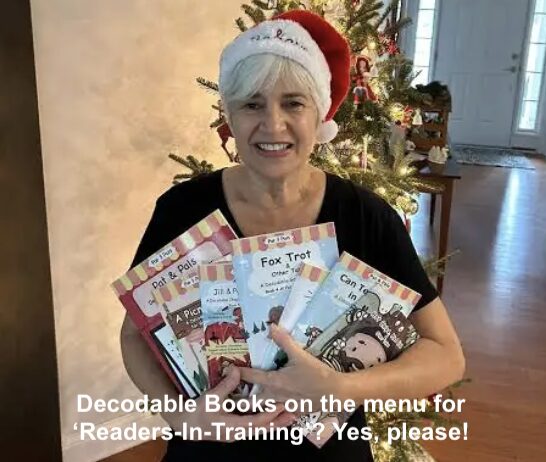
Let’s order from the same menu so we know what we are talking about from the outset!
3 Types of Books on the Menu When Teaching Foundational Skills to ‘Readers-In-Training’:
Decodable Books
Decodable Books are those targeting specific sound/symbol relationships and reliable phonics patterns such as short vowels and basic consonant sounds, etc. These books allow beginning or foundational ‘Readers-In-Training’ a way to practice decoding taught and optimally known concepts. Decodables are an integral part of a Structured Literacy approach where students are directly and explicitly taught concepts in a well thought out sequence. A limited number of ‘High Frequency Non-Phonetic Words’ (AKA Heart Words) are also included. These books are designed to help ‘Readers-In-Training’ of all ages. Even older, struggling ‘Readers-In-Training’ benefit from the practice decodable readers provide.
These books allow far greater actual decoding practice opportunities due to the high percentage of words easily decoded or ‘sounded out’ (at least 65%, but often up to 90%; there is no ‘exact’ percentage try as I might to find it). Freddie Hiebert, of the Text Project reports ‘value added’ to both practicing decoding as students repeat identical words, as well as adding unique decodable words per hundred words read. Decodables provide intentional practice opportunities! Students to gain additional practice applying the phonics knowledge they possess.These book may appear boring, babyish, and perhaps contain some stilted language to you as a literate adult. Not so for beginning readers and spellers, no matter their age.
One more thing—YOU will be better able to work with decodables if YOU are familiar with the basic phonics concepts. The glossary in my book, Calling All Neurons! How Reading and Spelling Happen! includes many of the terms you may wish to become familiar.
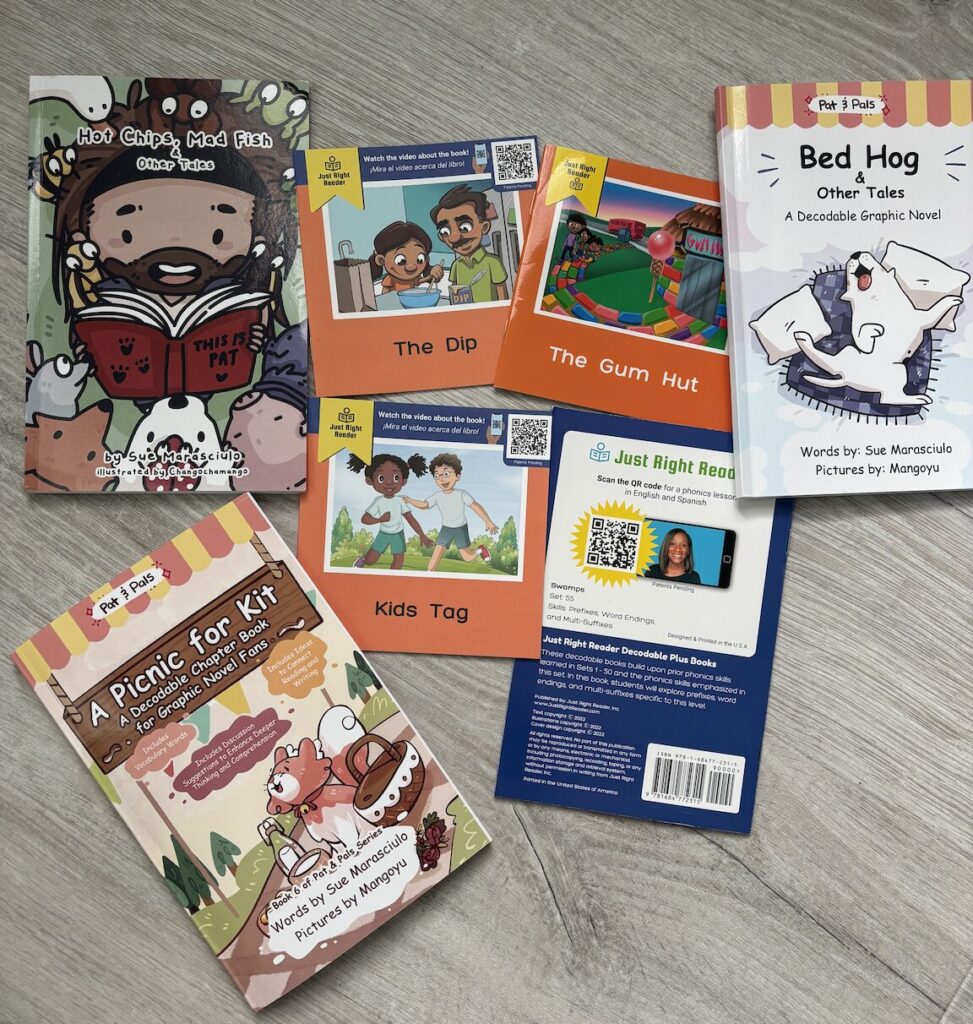
Here are a couple of samples of Decodable Books from Pat and Pals Graphic Novels and Just Right Readers.
Screenshot by Lori Josephson
Leveled Books
Leveled Books, on the other hand, contain numerous phonics patterns (which may or may not be aligned to phonics patterns taught), using repetitive language. These books are often referred to as ‘patterned’ or ‘predictable’ books. Young readers often memorize (rather than decode) the repetitive language and rely upon the picture cues to ‘read’ the unfamiliar word–or just focus on the first letter in a word. This is because the language is specifically selected and repeated to make the text easily recalled since it is based upon familiar oral language. As a result, students often simply ‘memorize’ the text rather than truly attending to matching the letters with the sounds represented. I ask you, is the reader truly ‘reading’?
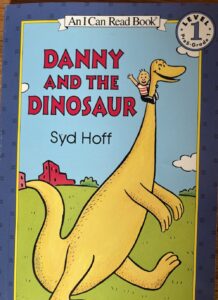
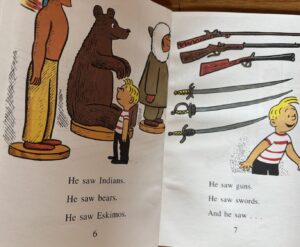
Here is sample of a Leveled Book cover (the ‘Level 1’ label is up at the top right partially cut off), as well as sample text from this Leveled Book. Please excuse now outdated language referring to Native Americans! Note the repetitive language (‘he saw’).
Authentic ‘text’ Books
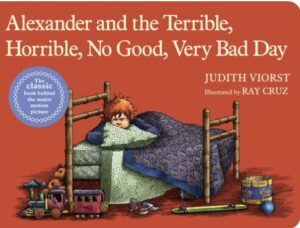
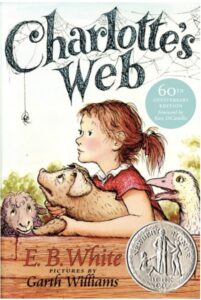
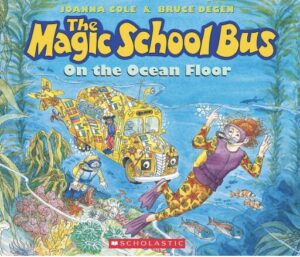
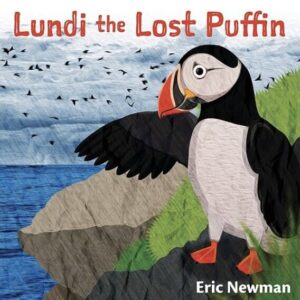
Authentic Books (not to be confused with what you remember as academic ‘textbooks’ for social studies, science or math) are those all stakeholders WANT children to be able to read independently! These are sometimes referred to as ‘trade books’. These books constitute “the finish line” so to speak for readers of all ages. Authentic books are those containing: 1-all if not most phonics patterns, which can be automatically and fluently read, 2-more advanced vocabulary and complex sentence structures, 4-trade books can be either fiction (narrative text) or non-fiction (expository text). Children experience their first exposures to Authentic Books hopefully sitting on the lap of a family member/caregiver WAY BEFORE the child is ready to learn to read. Read-alouds in the preschool, library story hours readily available, and school environments provide the bedrocks of vocabulary, background knowledge, and ‘book language’ development. More on ‘book language’ in next month’s article.
Samples of Authentic ‘text’ Books–the first 3 are well known and beloved narratives; the last one is non-fiction pictured below.
7 Reasons Why Foundational ‘Readers-In-Training’ Do Best Starting With Decodable Books
1. Increased Practice Opportunities for Decoding and Orthographic Mapping
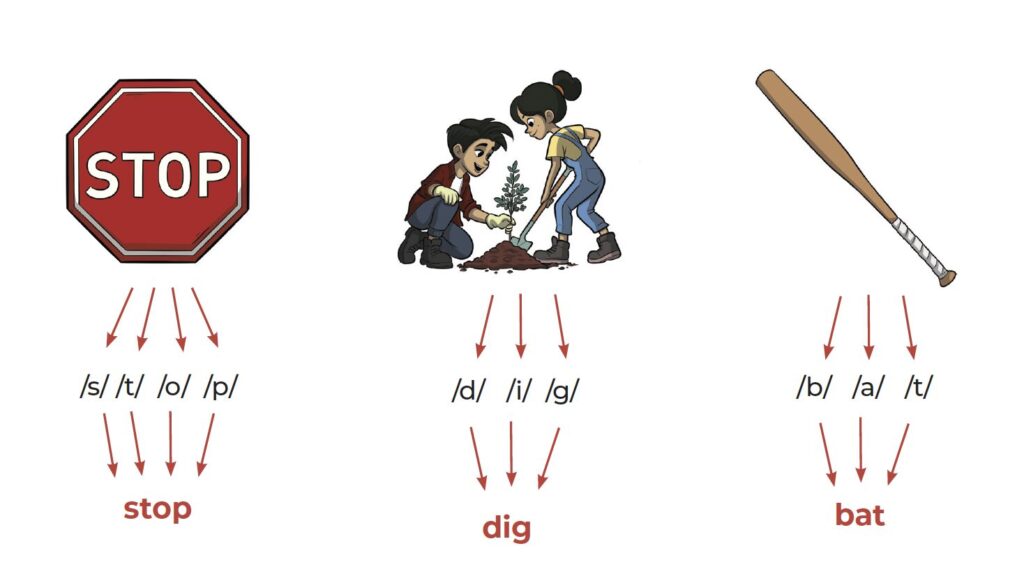
As I described, if a child has been taught using sound (phoneme)/letter[s] (grapheme[s]) associations, particularly in at the beginning stages of learning to read and spell, using decodable books provides direct practice, with opportunities for repetition for these foundational ‘Readers-In-Training.’
Orthographic mapping is easily understood using this illustration from Calling All Neurons! All words have 3 forms: 1-the letters representing the sounds, 2-the sounds in the word, 3-the meaning(s) the sounds/letters evoke.
Image ©Lori Josephson 2024
2. Achievement of Word Accuracy and Automaticity
Students who decode accurately either independently or with guidance from an educator or other adult will experience greater word accuracy, which will ultimately result in quicker word recognition. This is the essence of Word Automaticity. Word Automaticity is the point at which a reader looks at a word and immediately recognizes it without the need to ‘sound it out’ or decode it.
3. Achievement of Reading Fluency
What happens when foundational ‘Readers-In-Training’ are able to decode text automatically? You guessed it! They begin to read with fluency–that is, at an appropriate pace as if talking, as well as accurately, and with appropriate prosody (rhythm of natural oral language). Fluent reading allows the reader to have ‘brain space’ for vocabulary development and comprehension. Avoiding decodables actually may delay the development of reading fluency when attempting to read Authentic Books, which is the ‘finish line’ for readers! The reason: TOO MUCH GUESSING!
4. Increased Confidence
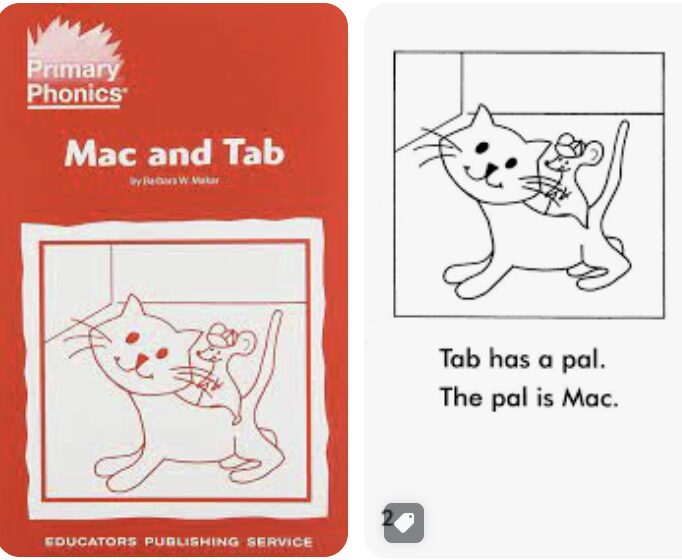
When many students use other types of reading materials (leveled books and authentic text) at the outset of learning to read and spell, many lack confidence since they must resort to guessing using context clues or pictures. This oftentimes results in unsuccessfully ‘reading’ unknown words. Thus, beginning readers demonstrate a lack of confidence. Alternatively, I am reminded of a friend and colleague’s son, who remarked after reading Primary Phonics Book Mac and Tab (yes, it’s decodable focusing on short /ă/) that it was “the first book he ever read” with a big smile on his face. Those of us who have worked with struggling readers most certainly can relate to this scene.
5. Increase in Reading Stamina
Simply put, success breeds success! Once a student is successfully able to truly read a book independently, even one as simple as Mac and Tab, they simply want MORE!! These students are far more willing to “put themselves out there” in terms of trying to read more books, hopefully in time, not simply decodable books. Increased motivation and engagement = increased stamina!
6. Reduction in Student Guessing
Not one more word is needed here!
7. Allows the ‘Adult in the Room’ to be sure the student is truly reading and not guessing!
I worked in medium sized private school back in the 1990s. The Head of the Lower School (Grades PK-2), Anne K., deemed children who appeared to be reading as ‘foolers’. What was she talking about? These were the children who looked and sounded like they were reading, but were the ones who successfully memorized many, many words without truly being able to decode them. If one uses decodable books and YOU know what phonics concepts and high frequency words the students have been taught, you will have a much better idea of whether these foundational ‘Readers-In-Training’ are truly decoding. Ann K. was frustrated by these foolers and I was hired to work with small groups of children to teach them true decoding. You bet I used decodable readers!
Although the pros far outweigh the cons in terms of the use of decodable books, I will share the reasons for their limited lifespan in next month’s article.
Let’s Hear From Decodable Text Author Sue Marasciulo

I had a chance to speak personally to Sue Marasciulo, who has successfully written and sold nearly 20,000 of her Pat and Pals Decodable Graphic Novels. I had the pleasure of speaking with her this summer via Zoom, where she explained her approach and motivation for writing the series of 5 books, with more in the works. Her books appear on the shelves of public and private schools, libraries, and home schoolers.
Image by Lori Josephson
Sue writes decodable graphic novels (inclusive of chapter books) for struggling readers. She describes this venture as her ‘retirement goal’. It is her passion to help struggling readers, many of whom have dyslexia, develop their decoding skills. She uses a graphic novel format, in her words, “as a hook for the students.” Additionally, Sue liberally uses humor to keep her readers laughing as they practice decoding. Anna Geiger, The Measured Mom, said Sue’s books, “actually [left her] laughing out loud when reading some of these – they are truly clever and funny–not something that I usually say about even the best decodable books”. With the increased interest and availability of graphic novels for all readers, Sue’s books are highly motivational to reluctant readers. Sue stated that “kids literally gravitated toward graphic novels.” I can attest to that in my own experience.
Sue spent the latter part of her career using Structured Literacy techniques. Sue stated that she “likes to be precise when I teach. Structured Literacy techniques allow for this.” She discussed the positive strides her students experienced, stating, “I just LOVE it!” Sue emphasized, “I don’t know how you can teach kids to read if they don’t know what the basic consonants and vowel sounds are,” referring to the concept of syllable patterns. Sue went on to sing the praises of her illustrator, Mangoyu, who, “brings my words to life.” So true!! The illustrations are colorful, upbeat, and look a lot like ones seen in other graphic novels.
Newer books, such as A Picnic for Kit, includes vocabulary words, discussion suggestions to enhance thinking, comprehension, and suggestions to connect reading and writing. Just see for yourself!
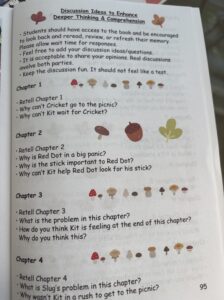
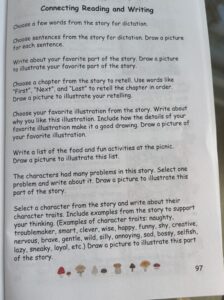
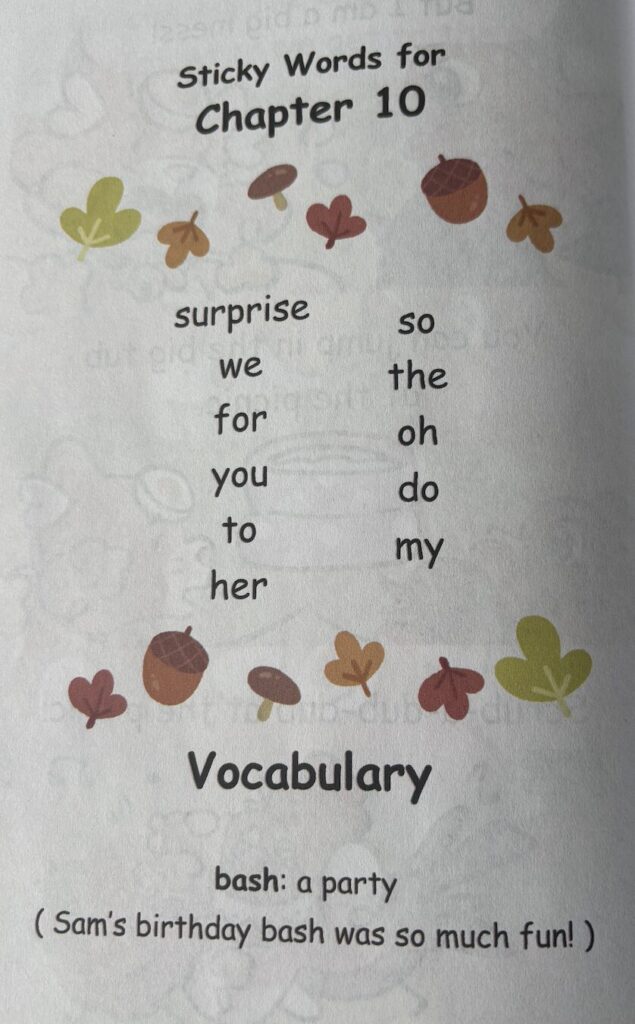
Sue’s books refer to High Frequency Non-Phonetic Words as ‘Sticky Words’. In other words, these are the words kids get ‘stuck’ on. These words are also referred to as ‘Heart Words’. You can have a look at a sample page of ‘Sticky Words’ (plus a vocabulary word) here.
Screenshot by Lori Josephson
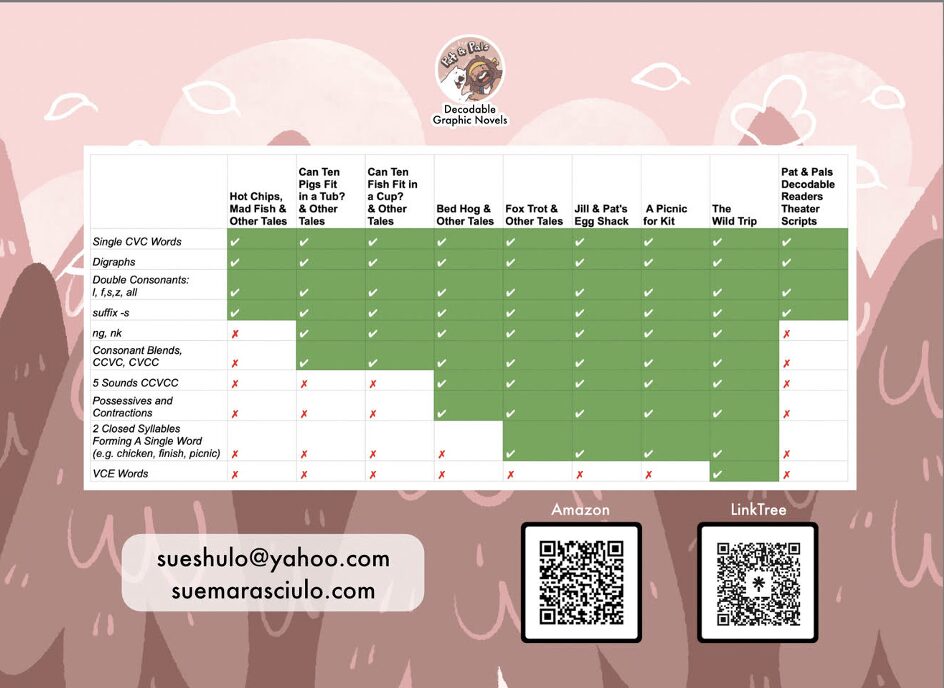
Sue told me of the many letters she receives from both teachers and parents requesting even more books at each level. Below you can have a look at the scope and sequence Sue follows. Sue plans on writing more books at the very beginning levels of decoding (CVC short vowel words) since she receives so many requests to do so.
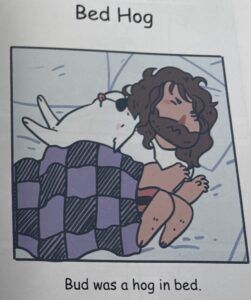
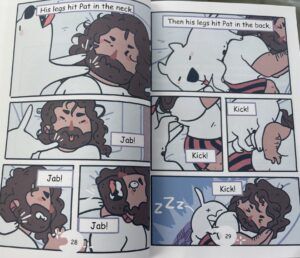
As I mentioned above, Sue validated the point of instilling confidence in reluctant readers, stating she has heard these students say, “I can do it.” These students are asking for more of Sue’s talents. Sue liberally uses humor because “using humor provides a real hook” for students. Below are samples from Bed Hog & Other Tales.
I asked Sue for her message to parents, educators, and potential readers of her books. Here is what she had to say:
“I hope my Pat & Pals Decodable Graphic Novels open up a world of reading joy for everyone who joins Pat and his pals on their silly adventures.” ~Sue Marasciulo
As a fellow writer, I asked Sue how long it takes to produce one of her decodable graphic novels. As you would imagine, it takes longer than one thinks–approximately 4-5 months! Like me, Sue makes herself available to participate in Author Talks with libraries, schools, etc.
Words of Advice: How To Read Decodables With Foundational ‘Readers-In-Training’
1-Select appropriate books aligned with the phonics skills the child has been taught.
2-Allow the child to ‘take the lead’ when reading aloud only offering support for corrective feedback. Have the child ‘touch the text’ with a finger or pointer. Be sure–even check that the child is able to blend individual phonemes or sounds (‘/b/ /ĕ/ /d/’ for ‘bed’). Then you are certain the child is truly ‘reading/decoding’ rather than memorizing.
3-If the child gets stuck on a word containing phonics elements they have not yet been taught or have not mastered OR a High Frequency Non-Phonetic Word they have not mastered, TELL them the word. There is no harm in this and the child’s confidence will remain intact. Best to avoid statements such as: “Look at the picture”, “Use the first letter in the word to help you figure the word out”, “Does the word you said make sense?” And be sure to heap on the positive reinforcement for effort (and outcome).
4- Discuss any unknown vocabulary. Next have the child retell the decodable (even a sentence or page at a time) what the book was about.
5-Hit the ‘repeat’ button. Unlike many adults, children and also older struggling readers do not mind and even enjoy rereadings. When you see a struggling reader or even a beginning reader realize they have begun to crack the code of English, there is just nothing like it. I’ve witnessed the laughter, joy and even tears (usually mine) literally dozens of times over the course of my career.
Next month, I will continue the important discussion about Leveled Books and Authentic ‘text’ Books. Why? Because these Decodable Books HAVE A WINDOW–that is, they have a limited time span! We don’t want any missed opportunities to advance literacy skills in children or struggling readers of any age. Please Stay Tuned!!