
THE PRELUDE
Everyone eats dinner…sometimes we eat at home without an appetizer, sometimes at home with an appetizer. Sometimes, especially to celebrate a special occasion or just to socialize with others, we dine out at a restaurant. Oftentimes, folks get an appetizer to share, but what folks look forward to the most is the main course. And sometimes have dessert as a special treat!
Back to what this has to do with literacy development!
In my September blog, I defined the 3 types of books ‘Readers-In-Training’ typically available in schools, libraries, bookstores, and in ‘big box’ stores like Wal-Mart. If you missed it, I’m going to again explain the 3 types of books:
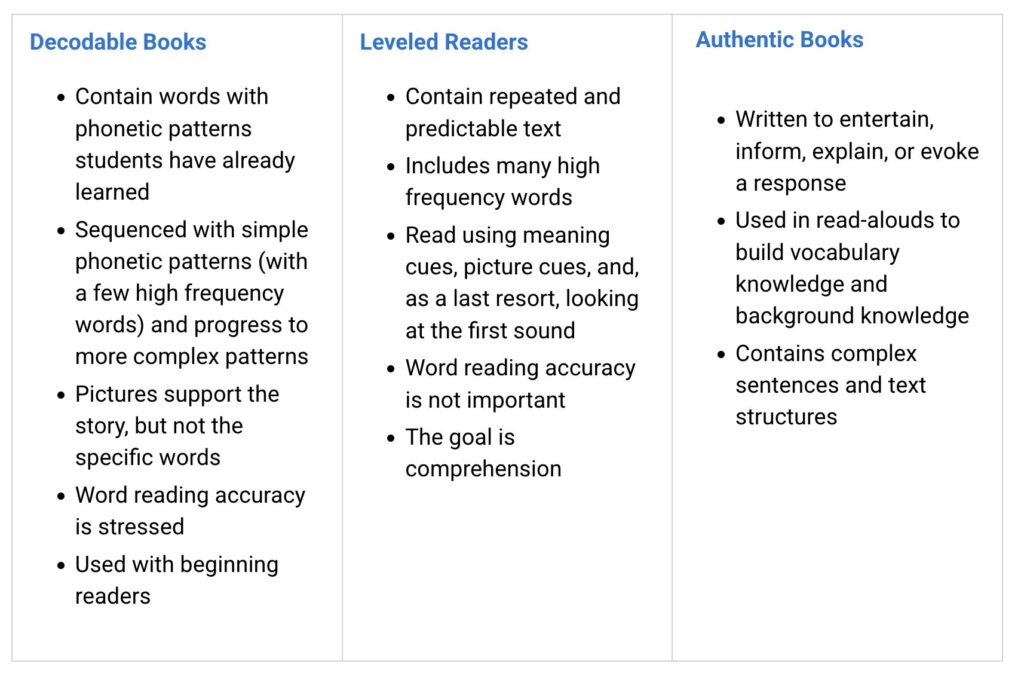
Decodable Books are those targeting specific sound/symbol relationships and reliable phonics patterns such as short vowels and basic consonant sounds, etc. These books allow beginning or foundational ‘Readers-In-Training’ a way to practice decoding taught and optimally known concepts. Decodables are an integral part of a Structured Literacy approach where students are directly and explicitly taught concepts in a well thought out sequence. A limited number of ‘High Frequency Non-Phonetic Words’ (AKA Heart Words) are also included. These books are designed to help ‘Readers-In-Training’ of all ages. Even older, struggling ‘Readers-In-Training’ benefit from the practice decodable readers provide.
Authentic Books (not to be confused with what you remember as academic ‘textbooks’ for social studies, science or math) are those all stakeholders WANT children to be able to read independently! These are sometimes referred to as ‘trade books’. These books constitute “the finish line” so to speak for readers of all ages. Authentic books are those containing: 1-all if not most phonics patterns, which can be automatically and fluently read, 2-more advanced vocabulary and complex sentence structures, 3-trade books can be either fiction (narrative text) or non-fiction (expository text). Children experience their first exposures to Authentic Books hopefully sitting on the lap of a family member/caregiver WAY BEFORE the child is ready to learn to read. Read-alouds in the preschool, library story hours readily available, and school environments provide the bedrocks of vocabulary, background knowledge, and ‘book language’ development.
Leveled Books, on the other hand, contain numerous phonics patterns (which may or may not be aligned to phonics patterns taught), using repetitive language. These books are often referred to as ‘patterned’ or ‘predictable’ books. Young readers often memorize (rather than decode) the repetitive language and rely upon the picture cues to ‘read’ the unfamiliar word–or just focus on the first letter in a word–or are even encouraged to ‘guess’! This is because the language is specifically selected and repeated to make the text easily recalled since it is based upon familiar oral language. As a result, students often simply ‘memorize’ the text rather than truly attending to matching the letters with the sounds represented. I ask you, is the reader truly ‘reading’?
LET’S REVISIT DECODABLES…JUST FOR A MINUTE
I want to reiterate the importance of exposure and practice using decodable readers with beginning or foundational or beginning ‘Readers-In-Training’. Decodable books provide well needed practice, as well as an inherent boost to a new reader’s confidence. Their use assists the teacher, parent, and/or caregiver in terms of truly knowing if a student is truly ‘decoding’ rather than simply memorizing. After all, many children have highly developed visual memory skills. These skills can sometimes ‘fool’ adults into thinking that the child is ‘decoding’ when the child is simply memorizing words as ‘whole units’ instead of using letter-sound correspondences. This said, decodable books have a very short window for most students! That is, they are the ‘appetizer’. The idea is to allow our ‘Readers-In-Training’ the opportunity to read Authentic (text) Books as soon as possible.
WHAT ARE THE PREREQUISITE SKILLS NEEDED TO MAKE THE SHIFT TO AUTHENTIC BOOKS?
Believe it or not, it does not appear that any research has been done to answer this particular question. That said, I was able to find some comments from a couple of literacy experts “in the know”. I did read anywhere from after “2-3 months of instruction when students can decode CVC words” (1 syllable words with short vowels). Anna Geiger, The Measured Mom, states “this is too soon” and I most certainly agree!
Linda Farrell, of Readsters, noted that “accuracy precedes fluency (reading rate)” and that students need to read 35 words correct per minute with no more than 1 error.. Additionally, students must be able to decode:
- 1 syllable words with short vowels such as ‘it’ and ‘cat’
- 1 syllable words with digraphs (2 letters = 1 sound such as <ch> as in ‘chin’ and 2-3 consecutive consonants such as <sl> as in ‘slip’ or <str> as in ‘strap’
- 2 syllable words; 2 syllable words with schwa as in ‘wagon’ (the <o> is unstressed schwa)
- 1 2, 3 syllable words with the open syllable (such as ‘baby’), r-controlled (such as ‘party’), and vowel-consonant e (as in ‘beside’) syllable patterns
- recognition of “Heart Words” (high frequency non-phonetic words) to the tune of about 90 of them
According to Linda Farrell, this reference point occurs somewhere in the middle of grade 1. While this may be true for many students, others will take a lot longer to achieve the above goals. Therefore, they will need continued practice with decodable books.
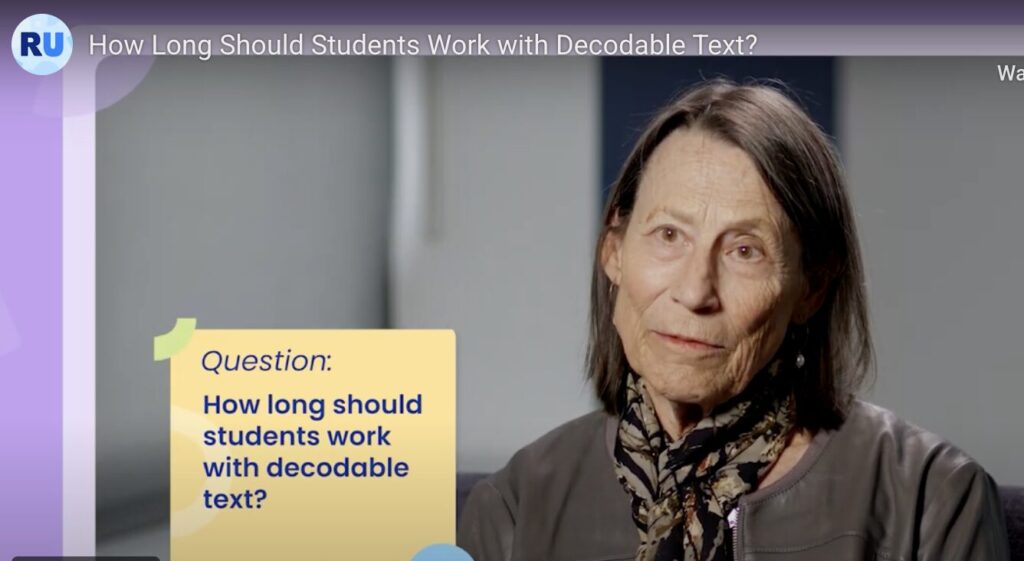
You can see how Dr. Louisa Moats weighs in here. In this short video, Dr. Moats emphasizes practice with decodables until a student can use and apply regular sound/symbol correspondences to read words accurately. They also must recognize a modicum of words (many of them will likely be high frequency non-phonetic words–this is my add) immediately without the need to ‘decode’/’sound out’ every word. Dr. Moats asserts that the student will need to automatically and accurately read several thousand words. Dr. Moats cautions adults to listen to the student reading, noting the accuracy levels of students reading decodables prior to shifting to authentic books. Of course, students vary in terms of how much practice with decodables is needed prior to ‘the shift’.
Screenshot by Lori Josephson
WHAT IS ‘BOOK LANGUAGE’? AND WHY ARE AUTHENTIC BOOKS IMPORTANT?
I recently had the opportunity to listen to Maryellen MacDonald deliver a webinar at Planet Word Museum in Washington DC. This museum is all about ‘language’! I haven’t had the opportunity to visit, but it is on my ‘bucket list’!
Dr. MacDonald researches and writes extensively about ‘book language’. It is her contention that children hear far more vocabulary words, descriptive words, emotion words, different verbs, and far more complex sentence structures when listening to and reading books than when engaged in oral communication. Children also become familiar with storytelling features while reading and listening to books being read. When engaged in oral language (with adults and also with other children), many more pronouns and simple verbs are used because a good deal of non-verbal communication exerts its influence. Obviously, these influences do not exist when one is reading or listening to a book.
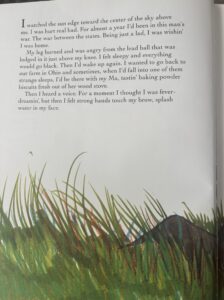
In fact, Dr. MacDonald stated that complex sentences are 6-50% more prevalent in children’s picture books than in oral language exchanges! The author has no other choice but to communicate with words (and sometimes pictures). I plan to write more about ‘book language’ in future blog posts because awareness of this concept is an imperative for both parents and educators. Just have a look at the two examples below, taking note of the specificity of the vocabulary selected, figurative language, and especially the complexity of the sentences.
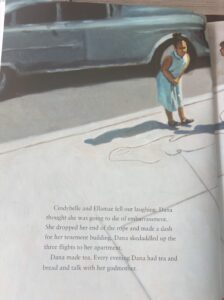
In the excerpt from Don’t Say Ain’t, note the phrases, “fell out laughing”, “thought she was going to die of embarrassment”, and “made a dash for her tenement building.”
In the excerpt from Pink and Say, note the the detailed description of the sun’s path: “I watched the sun edge toward the center of the sky above me.” And how about this description of what it felt like to suffer an injury sustained during the Civil War: “My leg burned and was angry from the lead ball that was lodged in it just above my knee.”
And one other idea to share: IF students spend too much time practicing reading with decodable books and/or leveled books, it takes away valuable experiences of practicing reading authentic books—and isn’t this the endpoint of reading comprehension? I hope you are nodding your heads as you read right now.
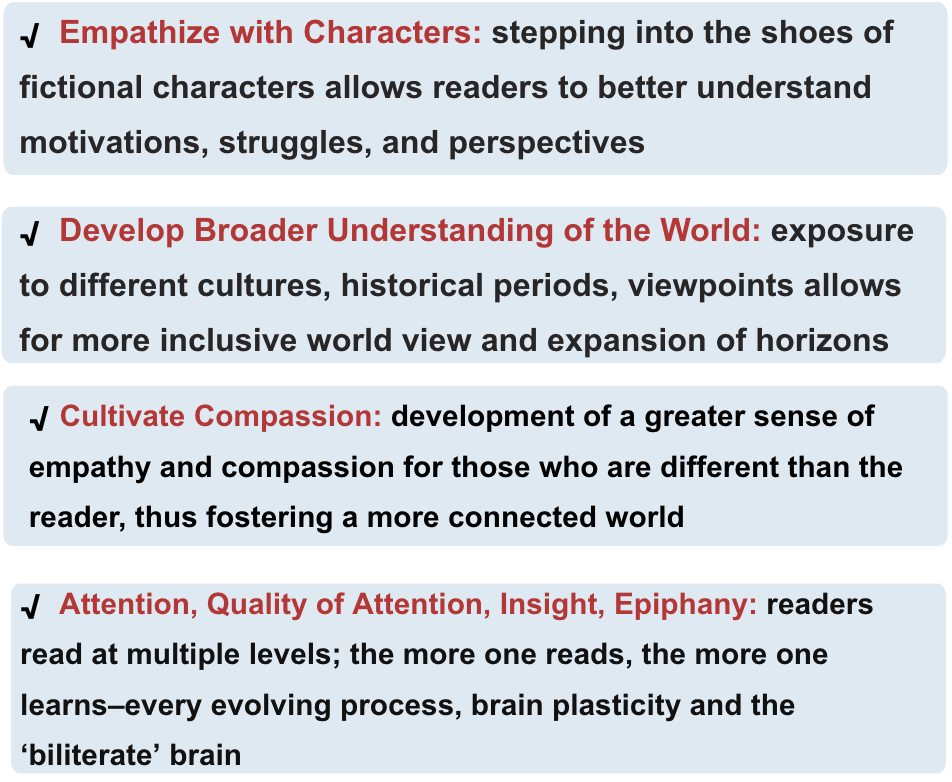
I turn to the work of the great Dr. Maryanne Wolf. She answers the question as to the real reasons why authentic books are important. Hence, these reasons are the ‘main course’ and ‘dessert’!
WHAT ABOUT THOSE ‘LEVELED’ BOOKS?
Let me give you a reminder of what they are…. You can recognize them because they are labeled ‘Level 1, 2, 3’ or ‘Level A, B, C’
Just so you get a better idea of what I am talking about, here is a chart comparing Decodables with Leveled Books.
Screenshot by Lori Josephson
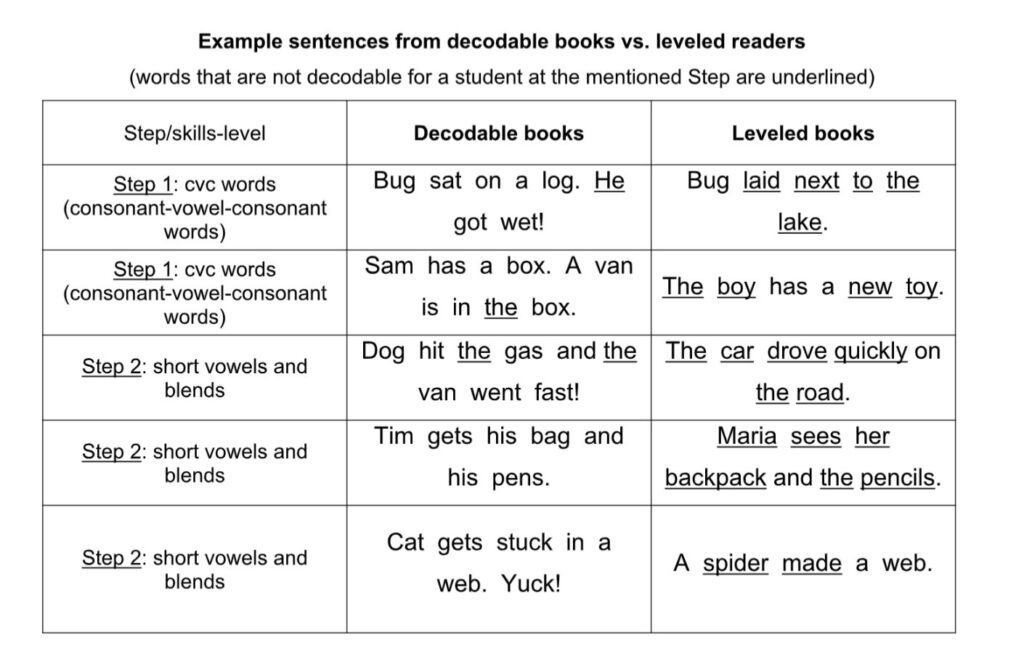
Here is another way to understand the differences between decodable and leveled books. Pay close attention to the complexity of the phonics patterns. Note how many more words are underlined signifying high frequency non-phonetic words and phonics patterns that may have not yet been taught in the leveled books as compared to the decodables.
Screenshot by Lori Josephson.
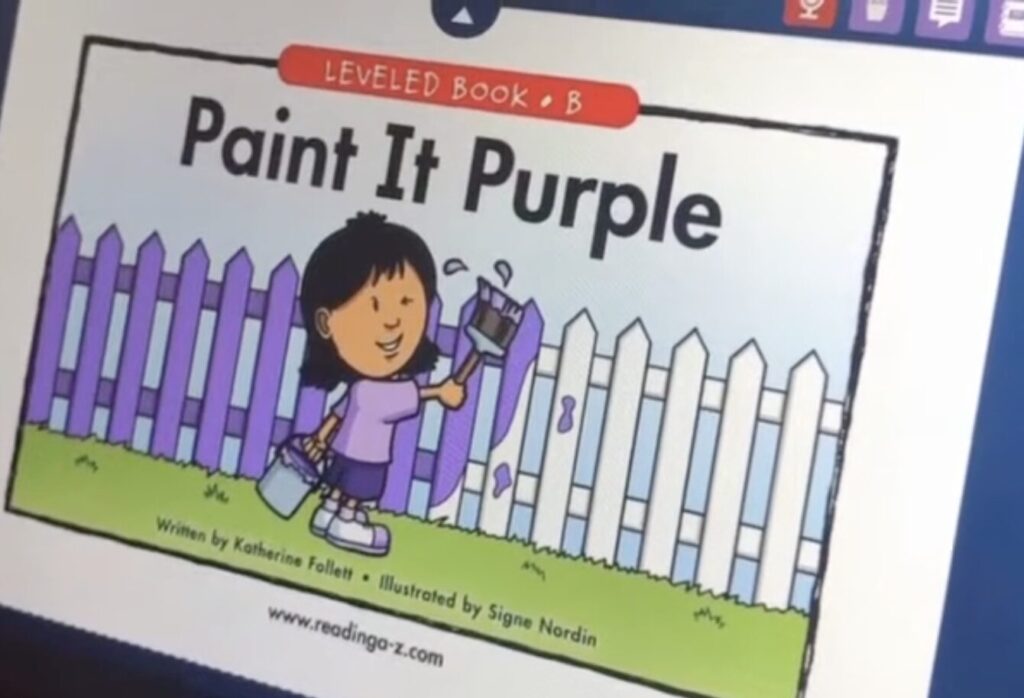
The most powerful resource I can share with you all are two short videos entitled “The Purple Challenge” Part 1 and Part 2. Behavioral Psychologist Esti Iturralde Ph.D. created these videos when her own first grade daughter was ‘reading’ a book containing the word ‘purple’ over and over again.


Her daughter was easily able to read the text including the word ‘purple’ over and over again. The child ‘appears’ to be ‘reading’ due to the repetitiveness of the language and the very obvious picture clues. Yet, when her daughter is shown the word ‘purple’ in isolation, she is totally unable to actually ‘read’—or better said, ‘decode’ the word
Take the small number of minutes to view these videos. I don’t think you will be sorry, especially if you are the parent of a young school age child or a struggling reader of any age. Dr. Iturralde stated, “her eyes opened wide to how her daughter was being taught literacy during the COVID pandemic” likely in ways she would not have so readily noticed.
Questions: What does the text in “The Purple Challenge” leveled books teach kids about comprehension? What does it tell them about a story line? Answers: Nothing…
Screeenshot by Lori Josephson (Note Leveled Book 5 at top)
Marion Waldman, Executive Director of Teach My Kid To Read’ has a simple mission: “To bridge the literacy gap by empowering libraries and communities with evidence-based training and resources grounded in the science of reading”. The goal is to be sure libraries and other literacy hubs provide equitable access to decodable books aligned with the Science of Reading helping to ensure every child can learn to read.
Teachers often ask what to do with the scads of leveled books when they switch to teaching using at first decodable books and then authentic (text) books. Two options are available. Option 1 is to simply abandon them. Option 2 is to organize them by topic, allowing students to read/look at them at will, but not for true instructional purposes.
BE A PROACTIVE PARENT AND PART OF YOUR CHILD’S LITERACY TEAM
Let me set the scene…parents take their kids to the library regularly. So many books exist for them to choose from. I have seen parents unknowingly select leveled readers simply because they look appealing and appear appropriate for their foundational ‘Readers-In-Training’. .
Parents: Please be aware of the sound/symbol relationships your child is comfortable with and select accordingly. Avoid selecting books with repetitive language mimicking simple oral language where the first words of the sentences are repeated and only the final word is different with an illustration to aid the child in terms of word recognition. If the book in question provides a ‘level’, well…it is a ‘leveled reader’. Share this information with friends.
It is far better to select read alouds with authentic text using more sophisticated vocabulary and sentence structure to read to and with your children than have them ‘practice’ using leveled books. My best advice: Think and choose wisely!
Let me tell you, these Leveled Books remain in many, many libraries throughout our country. Parents Beware! Now that I have described them, shown you what they look like, and shared their faulty ‘reading’ practice, I hope you will avoid them when taking your children to the public library to select books you think are helpful. If your child is not yet ready for authentic books, it is FAR better to read authentic books TO and WITH children, all the while allowing them more time to practice reading using decodable books.
Talk with your child’s teacher to get a handle on the sound/symbol relationships your child is working on or even mastered. It is perfectly fine to ask your child’s teacher to share the phonics scope and sequence with you. And since it is Parent-Teacher Conference Month for many school districts, you have the perfect opportunity to ask your questions, but any time is fine. Does your child write about what is being read?

You, as a parent, will be able to tell whether your child is able to read authentic text easily or continues to struggle. If your child appears frustrated, decodable books would likely be preferable to use as practice. That said, I cannot emphasize enough to spend time reading that authentic text to/with your child in order to expose the child to ‘book language’. Think of it as providing your child(ren) with both the main course and dessert at mealtime!!
Image from kindelmedia from Pexels
Greatly appreciated this post. It’s not something that is commonly presented or talked about. Thank you.
Hi Glen,
I guess you are still at it–tutoring!! Glad you enjoyed the post. This topic hit home–it actually hit my son’s home although I’m not sure it was read. We now have SIX grandkids!! 3 in Atlanta (ages 5+, 3+, and 2), 1 in Madison WI (age 1), and twin boys in Denver (3 months). It is a lot of travel!! So nice to hear from you!!
Lori